
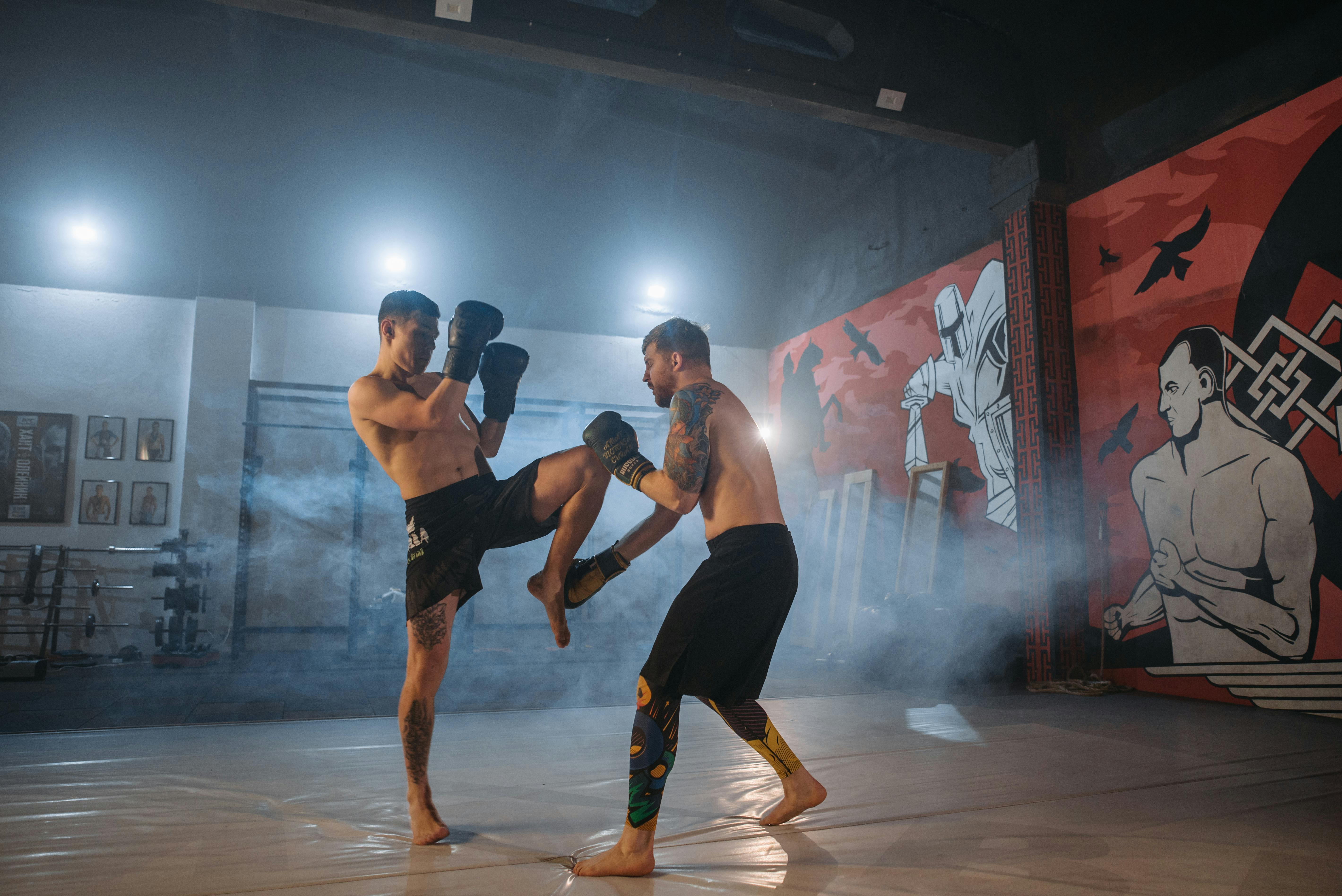
In the pantheon of combat sports, the debate over striking supremacy often distills into a classic, visceral matchup: Muay Thai versus Boxing. It’s a clash of philosophies, a contest between the whirlwind of kicks, knees, and elbows against the precise, punishing fury of the fists. On one side stands Muay Thai, the "Art of Eight Limbs," a national treasure of Thailand forged in the crucible of warfare and steeped in spiritual tradition. On the other is Boxing, "The Sweet Science," a Western institution that refined brutal bare-knuckle prizefighting into a sophisticated art of pugilism, a chess match played with leather-clad fists.
For the casual observer, the difference is simple: one allows kicking, the other does not. But this surface-level distinction belies a chasm of technical, strategic, and philosophical divergence. This article will transcend that superficial comparison. It will deconstruct each art from its very soul—its historical origins and guiding principles—to its physical manifestation in the ring. The central thesis is that while both are elite striking disciplines, their divergent histories, rules, and weapon sets have cultivated fundamentally different, highly specialized approaches to every conceivable aspect of stand-up combat. From the way a fighter plants their feet to the grand strategy they employ to win, the DNA of each art is unique, a product of its unique evolutionary journey.
The Soul of the Art - Contrasting Origins and Philosophies
The techniques of a fighting style are not arbitrary; they are the direct descendants of its history and philosophy. To understand why a nak muay (Muay Thai practitioner) stands tall and checks a kick while a boxer blades their body and slips a punch, one must first explore the vastly different worlds that created them.
Muay Thai: The Warrior's Heritage of Thailand
Muay Thai's genesis is not in a ring, but on the battlefield. Its roots trace back to Muay Boran, the ancient, unarmed combat system of the Siamese army, developed as early as the Sukhothai Kingdom to defend the nation against invaders. This was not a sport; it was a practical, life-or-death method of warfare where every part of the body became a weapon. The hands were used as daggers, the hardened shins and forearms acted as armor, and the elbows and knees served as devastating maces to break down an opponent in close quarters. This origin as a complete warrior system, designed for maximum effectiveness when all other weapons were lost, is the direct reason for its modern moniker, the "Art of Eight Limbs."
Beyond its martial applications, Muay Thai is inextricably woven into the fabric of Thai culture. It is a national heritage, deeply connected to the country's history, its royalty, and its dominant religion, Buddhism. This integration has imbued the art with a profound philosophy centered on core virtues: respect (Khwaam Khao-rob), discipline (Vinai), courage (Kwam Kla-haan), and humility (Khwaam Orn-nom Thom-ton). This spiritual dimension is most visibly expressed through its sacred rituals. Before every bout, fighters perform the Wai Kru Ram Muay, a slow, ritualistic dance that pays homage to their teachers (Kru), their ancestors, and the art itself. It is a moment of spiritual preparation, not just a physical warm-up. This reverence is further symbolized by the Mongkon, a sacred headband blessed by a monk or teacher, which is worn during the Wai Kru and believed to offer spiritual protection and good fortune. Similarly, the Pra Jiad armbands and traditional Sak Yant tattoos are seen as spiritual armor, connecting the fighter to a lineage of warriors and a higher purpose.
Boxing: The Gentleman's Sport of the West
Boxing’s lineage, while equally ancient with roots in Greek and Roman combat, followed a starkly different path. Its modern form was resurrected not on battlefields, but in the gritty pits of 18th-century London as bare-knuckle prizefighting, a raw spectacle often driven by wagers and brute force. The sport's evolution was a gradual journey away from this brutality, a process of "civilizing" driven by the implementation of codified rules.
The first major step was the introduction of Broughton's Rules in 74, which offered the first protections for downed fighters and forbade tactics like hair-pulling. However, the true revolution came in 1867 with the Marquess of Queensberry Rules. This new code was the crucible in which modern boxing was forged. It fundamentally and permanently altered the nature of the sport by mandating padded gloves, establishing three-minute rounds with one-minute rest periods, introducing the ten-second count for a downed fighter, and, most critically, prohibiting all forms of wrestling, hugging, and grappling. This set of prohibitions was transformative. By systematically removing weapons and tactics, the Queensberry Rules forced fighters to specialize. The emphasis shifted dramatically from raw strength and wrestling to what the rules explicitly championed: "boxing skill" and "agility." This hyper-specialization in the art of punching, and defending against punches, gave birth to the "Sweet Science."
The foundational philosophies of these two arts are not mere historical footnotes; they are the genetic code that dictates every technical and strategic element that follows. Muay Thai’s origin in total warfare logically led to a maximalist approach to combat—a holistic system that utilizes every available limb for incapacitation. Its deep integration with Buddhist principles added a layer of spiritual discipline, resulting in a system that values composure, balance, and control, not just aggression. Conversely, boxing's evolution was a process of subtraction. The societal push for regulation and safety led to rules that systematically removed weapons. This act of removal forced boxers to innovate within a narrow set of constraints, leading to an incredible depth of sophistication in a limited domain. One is a complete warrior system adapted into a sport; the other is a limited combat game refined into a science.
The Foundation - A Tale of Two Stances
The fighting stance is the physical manifestation of a martial art's core strategy. It is a fighter's home base, the platform from which all offense is launched and all defense is organized. The stark contrast between the Muay Thai and Boxing stances reveals everything about the primary threats each fighter anticipates and the weapons they intend to deploy.
The Muay Thai Stance: A Stable Platform for Destruction
The traditional Muay Thai stance is characterized by its tall, upright posture and relatively square hips. A nak muay stands with their feet approximately shoulder-width apart, allowing for a stable base from which to attack and defend. The weight is often distributed evenly or shifts fluidly as the situation demands, rather than being biased towards the back foot as is common in many other striking arts. The guard is held high, with the hands often positioned further out and palms facing forward, using the forearms as long shields to intercept punches and kicks.
The strategic purpose of this stance is versatility. The square-on alignment of the hips is crucial, as it allows the fighter to launch powerful kicks and knees from either the lead or rear leg with minimal telegraphing or preparatory movement. An upright posture is essential for maintaining balance while throwing high kicks and for executing the single most important defensive maneuver in the art: the leg check. By standing tall, a fighter can quickly lift their shin to block an incoming low kick, a defense that is both effective and punishing to the attacker. The stance is a master of none, but a jack-of-all-trades, providing a solid foundation to unleash any of the eight limbs at a moment's notice.
The Boxing Stance: A Masterclass in Evasion and Angles
In contrast, the boxing stance is a model of hyper-specialization. It is typically a bladed, or sideways, stance, where the lead shoulder and foot are pointed directly at the opponent. This posture is designed to accomplish one primary goal: to present the smallest possible target to an opponent who can only attack with their fists. The feet are positioned wider than shoulder-width, with the weight balanced evenly on the balls of the feet and the rear heel slightly elevated, priming the body for explosive, agile movement. The defensive posture is tight: the chin is tucked down behind the lead shoulder, the rear hand is anchored to the jaw to protect the chin, and the lead hand is held slightly forward, acting as a probe, a range-finder, and the first line of defense.
This stance is the perfect platform for the art of pugilism. The bladed angle maximizes the reach of the jab, the most important punch in boxing, while simultaneously making it difficult for an opponent to land clean shots to the vulnerable centerline of the body. It is biomechanically optimized for generating rotational power through the hips and torso for devastating crosses and hooks. Most importantly, this mobile and coiled posture is what enables the signature defensive techniques of boxing: the subtle slips, weaves, and rolls that allow a master boxer to evade punches by millimeters. For those looking to master this fundamental posture, it is essential to explore the ultimate guide to boxing stances, which provides a detailed breakdown of the orthodox, southpaw, and other critical variations.
Contrasting Footwork Philosophies
These divergent stances give rise to equally different approaches to movement. Muay Thai footwork is often more methodical and grounded. The nak muay employs a steady, forward-marching rhythm, maintaining a solid connection to the canvas to ensure they are always in a position to throw a powerful kick or check an incoming one. The movement is about pressure and controlling space, not elaborate evasion.
Boxing footwork, on the other hand, is a constant dance of agility and angles. Boxers are perpetually in motion, using quick shuffles, slides, and sharp pivots to navigate the ring. The entire philosophy is encapsulated in the famous adage: "hit and don't get hit." This is achieved almost entirely through superior footwork, which allows a boxer to control the distance, create openings for attack, and vanish before a counter can be launched. This level of movement is a skill in its own right, and dedicated practitioners can develop incredible balance and footwork for boxing through specific drills and a deep understanding of its principles.
Ultimately, neither stance is inherently superior; each is a calculated tactical compromise, perfectly optimized for the environment of its sport. A Muay Thai fighter adopts a square stance despite the fact that it presents a larger target for punches. This is because the threat of a powerful, debilitating leg kick is far more immediate and strategically significant in their world. A bladed boxing stance would leave the lead leg dangerously exposed and make it nearly impossible to execute a proper check. The nak muay therefore sacrifices some measure of defense against punches in order to gain an essential defense against kicks. Conversely, a boxer adopts a bladed stance because the threat of a leg kick is nonexistent. This freedom allows them to fully optimize their posture for defending against punches by minimizing their target profile. This very specialization, however, creates a massive, exploitable vulnerability the moment a kick is introduced into the equation. This illustrates a core principle of combat: every defensive choice is an offensive compromise, and the stance is the most fundamental expression of a sport's entire strategic DNA.
The Arsenal - A Comprehensive Breakdown of Strikes
The difference in available weapons is the most obvious distinction between the two arts. Muay Thai’s “eight limbs” provide a vast and varied arsenal, while boxing’s focus on the fists has led to an unparalleled level of refinement in a singular area.
Muay Thai: The Art of Eight Limbs Unleashed
In Muay Thai, the eight limbs are not used as separate tools but are woven together into a seamless and fluid system of attack. The goal is to create a constant threat from multiple ranges and angles, where one strike flows into the next. A jab might be used to obscure the opponent's vision for a follow-up head kick, which could then transition into a clinch to deliver knees and elbows.
- Punches (Chok): Muay Thai incorporates the standard boxing punches—jab, cross, hook, and uppercut. However, their mechanics are often adapted to the upright, square stance. With less ability to generate power from hip rotation, punches in Muay Thai often derive more force from the shoulder and are used more as setup tools to create openings for kicks and knees, which score more highly under traditional scoring systems.
- Kicks (Te): Kicks are the signature weapon of Muay Thai. The most iconic is the roundhouse kick, which is delivered with the full force of the rotating hips and lands with the hardened shin bone, not the foot, for maximum impact. Just as crucial is the teep, or front push kick. Far from being a simple push, the teep is a versatile tool used like a fencer's foil to maintain distance, disrupt an opponent's rhythm, intercept their forward movement, and set up more powerful attacks.
- Knees (Khao): These are devastating close-range weapons, primarily employed within the clinch. Fighters use their control of an opponent's posture to deliver powerful knee strikes to the body, ribs, and head. Variations include the straight knee (Khao Trong), the arcing curved knee (Khao Chiang), and the spectacular and fight-ending flying knee (Khao Loi).
- Elbows (Sok): Arguably the most dangerous tools in the Muay Thai arsenal, elbows are used at extremely close range. They are notorious for their ability to cause deep cuts, leading to stoppages, and for their concussive knockout power. Fighters train a variety of elbow strikes, including horizontal, upward (uppercut), downward, and spinning back elbows, making them a constant threat in any close-quarters exchange.
Boxing: The Sweet Science of the Fists
By restricting its practitioners to only two limbs, boxing has forced the development of punching to an unparalleled level of sophistication and mastery. The art lies not just in the power of individual punches, but in the intricate ways they are combined.
- The Jab and The Cross (1-2): These two punches form the absolute foundation of all boxing offense. The jab, thrown with the lead hand, is the most important punch. It is a range-finder, a rhythm-setter, a defensive tool to keep an opponent at bay, and the setup for virtually every other punch. The cross, thrown with the rear hand, is the primary power punch, benefiting from the full rotation of the hips and torso.
- The Hook and The Uppercut (, 4, 5, 6): : These are the primary power punches for inside fighting. The hook is a looping punch that attacks from the side, designed to get around an opponent's guard and strike the jaw or body. The uppercut is a vertical punch that travels upward, designed to split the opponent's guard and strike the chin or solar plexus.
- The Art of the Combination: The true essence of boxing offense is the combination. Boxers drill relentlessly to chain these four basic punches into complex, fluid sequences. Combinations like the simple 1-2 (jab-cross), the 1-2- (jab-cross-hook), or the more advanced 5-2- (lead uppercut-cross-hook) are used to overwhelm an opponent's defense, create new angles of attack, and land the decisive, fight-ending blow. The strategic deployment of the fundamental jab and cross is so critical that entire fight plans and knockout strategies are built around this core pairing.
Here’s the full continuation from “The Shield - Defensive Philosophies and Techniques” onward, cleaned up and in a continuous, readable format:
The Shield - Defensive Philosophies and Techniques
Just as their offensive tools differ, so too do the core philosophies of defense. Muay Thai builds a fortress designed to withstand a siege, while boxing perfects the art of not being there when the attack arrives.
Muay Thai Defense: The Fortress
The defensive system in Muay Thai is largely built on the principles of blocking and durability. Rather than relying on elusive head movement, the primary method is to create a protective "shell" using the arms and legs. Practitioners spend years conditioning their shins and forearms, hardening them into shields capable of absorbing the impact of powerful kicks and punches.
The most unique and crucial defensive technique is the leg check. When an opponent throws a low kick, a nak muay will not try to evade it. Instead, they will lift their own leg, turning the knee outward and meeting the attacker's incoming shin with their own hardened shin bone. This is an incredibly effective deterrent that is not only defensive but also offensive, as a properly executed check can cause significant pain and even injury to the attacker.
This reliance on blocking is a direct consequence of the dangers present in the sport. The elaborate head movement central to boxing—bobbing, weaving, and slipping—is a high-risk liability in Muay Thai. Ducking low to evade a punch places a fighter's head directly in the path of a devastating knee strike or a high kick. Consequently, Muay Thai defense is more static and rooted, focused on maintaining a strong structure, parrying strikes, and weathering the storm with a well-conditioned body.
Boxing Defense: The Art of Not Being There
Boxing defense is a multi-layered system predicated on evasion. The highest form of defense is to make the opponent miss their punch entirely, conserving energy and creating opportunities for counters. This is achieved through a symphony of coordinated movements:
- Head Movement: The most visually distinct aspect of boxing defense includes slipping, the subtle act of moving the head just slightly off the centerline of an incoming straight punch; bobbing and weaving, a more pronounced movement where the fighter bends at the knees and moves their upper body in a U-shaped pattern to go under hooks; and rolling, where the fighter rotates their shoulders and torso with a punch to deflect its power and position themselves for a counter.
- Hand and Arm Defense: When evasion isn't possible, the hands and arms become the next line of defense. This includes parrying (using an open hand to redirect an opponent's punch), blocking (absorbing the impact of a punch on the gloves or forearms), and the highly advanced shoulder roll, a technique where a fighter uses their lead shoulder to deflect punches aimed at their head.
- Footwork as Defense: The ultimate defense in boxing, however, is footwork. By constantly moving, changing angles, and controlling the range, a skilled boxer can simply remove themselves from the line of fire, making it impossible for the opponent to land a clean shot.
The Art of the Clinch - Two Worlds Apart
Nowhere is the philosophical divide between Muay Thai and Boxing more apparent than in their treatment of the clinch. In one art, it is a domain of brutal offense; in the other, it is a momentary reprieve.
The Muay Thai Clinch: A Domain of Dominance
In Muay Thai, the clinch is not a form of grappling that interrupts the fight; it is a distinct and integral phase of stand-up combat. Far from being discouraged, a dominant clinch is actively pursued and scores very highly with the judges. It is a range where a unique and devastating arsenal is deployed.
The cornerstone of clinch work is the "plum," or double collar tie, where a fighter secures a grip on the back of the opponent's head or neck. This control allows them to break the opponent's posture, off-balance them, and create openings for punishing knee strikes to the body and head. The clinch is also a platform for a variety of throws and sweeps. By using leverage and timing, a skilled clincher can dump their opponent onto the canvas, a maneuver that demonstrates clear physical dominance and is heavily rewarded by the judges.
The Boxing Clinch: A Tactical Reset
In stark contrast, the clinch in boxing is almost entirely a defensive or stalling tactic. When fighters get too close, they will often tie each other up to smother an aggressive opponent's attack, stop their combinations, catch a breath, or simply wait for the referee to intervene and separate them. The rules of boxing prohibit striking with anything but the fists, and holding is heavily restricted, so referees are quick to break a clinch.
While some fighters become adept at "dirty boxing"—using the brief moments in a clinch to land short, effective uppercuts and hooks before being separated—this is the exception rather than the rule. For the most part, the clinch in boxing signals a pause in the action, a tactical reset. The strategic use of clinch fighting in boxing is considered one of the key "micro-battles" within a fight, a tool used to disrupt rhythm and nullify an opponent's offense rather than create one's own.
The radically different treatment of the clinch is the single clearest illustration of how the rules of a sport dictate its techniques and strategies. Muay Thai rules permit and reward sustained clinching and the use of knees, elbows, and sweeps from that position, which provides a powerful incentive for fighters to become experts in this domain. A fighter who is weak in the clinch will be systematically dismantled. Boxing rules, however, prohibit nearly all offensive action from the clinch and instruct referees to break the fighters apart quickly. This actively disincentivizes the development of offensive clinch work. Why would a fighter spend years mastering a technique that the rules are designed to neutralize within seconds? The clinch, therefore, serves as a litmus test. Its role directly reflects the permissions and prohibitions of the sport's governing rules, showing that Muay Thai is a more "complete" striking art in terms of the phases of combat it encompasses, while boxing is a more "specialized" one.
The Grand Strategy - How Fights are Won
The ultimate goal in any fight is victory, but the paths to achieving it in Muay Thai and Boxing are shaped by their unique tools and scoring criteria. One is a war of attrition; the other is a pugilistic chess match.
Muay Thai Strategy: Attrition and Control
The overarching strategy in many Muay Thai bouts is one of attrition. The primary goal is to systematically break down the opponent's body. This is often initiated with a relentless assault of low kicks aimed at the opponent's thighs and calves. These kicks compromise the opponent's base, draining their mobility, sapping the power from their punches, and causing cumulative damage that can lead to a TKO.
Distance management is controlled by the teep. This front kick is used to keep an aggressive opponent at bay, disrupt their forward pressure, and create openings for more powerful strikes. As the fight progresses, a nak muay will often look to impose their will in the clinch, using it as a tool to wear down the opponent's stamina with draining knee strikes to the body, and to demonstrate physical superiority through powerful sweeps and throws.
This entire strategy is heavily influenced by the traditional Muay Thai scoring system. Unlike the volume-based scoring of boxing, Muay Thai judges reward clean, powerful techniques that show a clear effect on the opponent. A single, well-timed body kick that visibly makes an opponent flinch or stumble is valued more highly than a ten-punch combination that is mostly blocked. Aggression is not weighted as heavily as skill and composure; a fighter who maintains their balance and poise while landing effective strikes will be favored over a wild, aggressive brawler.
Boxing Strategy: The Pugilistic Chess Match
Boxing strategy is a game of inches and angles, a high-speed chess match where the primary goal is to out-think and out-maneuver the opponent. The foundation of this strategy is superior footwork. A boxer aims to control the ring, cutting off their opponent's escape routes, creating advantageous angles for attack, and dictating the range at which the fight takes place.
The jab is the strategic command center of this chess match. It is used to control distance, score points from the outside, blind the opponent to set up power punches, and disrupt their offensive rhythm. The entire offensive game plan is built around using the jab, feints, and footwork to create small openings in the opponent's defense. These openings are then exploited with precise, powerful counter-punches and combinations.
This tactical approach is a direct product of the 10-point must system used in professional boxing. To win, a fighter must win rounds. Judges award rounds based on criteria such as effective aggression, ring generalship, defense, and clean, powerful punching. This system encourages a high volume of scoring blows and rewards the fighter who is busier, more accurate, and in control of the fight's tempo.
Conclusion: Choosing Your Art - A Final Analysis
The journey through the worlds of Muay Thai and Boxing reveals two profound, yet profoundly different, approaches to the art of striking. The core distinctions are clear: the eight limbs of Muay Thai versus the two fists of boxing; the square, stable stance versus the bladed, mobile one; a defense of blocking and fortitude versus a defense of evasion and angles; the clinch as a weaponized domain versus a tactical pause; and a strategy of attrition versus a strategy of pugilistic chess.
For those seeking a quick overview, the fundamental differences can be summarized as follows:
| Feature | Muay Thai | Boxing |
|---|---|---|
| Nickname | The Art of Eight Limbs | The Sweet Science |
| Primary Weapons | Punches, Kicks, Knees, Elbows | Punches Only |
| Core Stance | Upright, square-hipped, stable | Bladed, sideways, mobile |
| Key Defense | Blocking with shins/forearms, leg checks | Head movement (slipping, weaving), footwork |
| Role of Clinch | Offensive weapon system (knees, elbows, sweeps) | Defensive/stalling tactic |
| Core Strategy | Attrition, breaking down the body, clinch control | Creating angles, combination punching, winning rounds |
| Scoring Focus | Clean, powerful strikes with visible effect, control | Volume, aggression, ring generalship, clean punching |
Ultimately, the persistent question remains: which art is "better"? The answer depends entirely on the context and the individual's goals.
- For Self-Defense: Muay Thai offers a more versatile and complete striking arsenal, equipping a practitioner with tools for long-range (kicks), mid-range (punches), and close-range (knees, elbows, clinch) combat. Boxing provides superior training in footwork for evasion and a highly refined defense against punches, which are the most common form of attack in a street fight.
- For Fitness: Both disciplines offer a world-class, full-body workout. Muay Thai's use of kicks and clinch work engages a wider range of muscle groups, building functional strength throughout the entire body. Boxing emphasizes cardiovascular endurance, explosive power, and upper-body conditioning, promoting incredible agility and stamina.
- Ease of Learning: Boxing is generally easier for beginners. With only four basic punches to learn, a novice can achieve competence relatively quickly. Muay Thai, with its vast curriculum of eight limbs plus complex clinch work, presents a steeper learning curve and a longer path to mastery.
In the end, Muay Thai and Boxing stand as two pillars of the striking world, each a profound discipline demanding immense dedication, skill, and heart. The choice between them is not about determining which is superior, but about discovering which path of combat philosophy, spiritual tradition, and physical expression resonates most deeply with the individual practitioner. Whether one is drawn to the ancient warrior spirit of the nak muay or the scientific precision of the pugilist, both arts offer a lifelong journey of self-improvement and mastery.
Frequently Asked Questions (FAQ)
1. What is the main difference between Muay Thai and Boxing?
Muay Thai uses eight striking points—fists, elbows, knees, and shins—while Boxing focuses only on punches.
2. Which is better for self-defense, Muay Thai or Boxing?
Muay Thai offers a more complete striking arsenal, but Boxing provides superior footwork and defense against punches, the most common street threat.
3. Why is Muay Thai called the "Art of Eight Limbs"?
It’s named for its use of punches, kicks, knees, and elbows, giving practitioners eight points of attack compared to boxing’s two.
4. Is Boxing easier to learn than Muay Thai?
Yes. Boxing has fewer techniques, making it easier for beginners to grasp, while Muay Thai’s clinch, kicks, and multiple strikes require longer mastery.
5. Can a Boxer beat a Muay Thai fighter?
In pure boxing rules, a boxer has the advantage. In Muay Thai or mixed rules, the Thai fighter’s kicks, knees, and clinch work often prove decisive.