
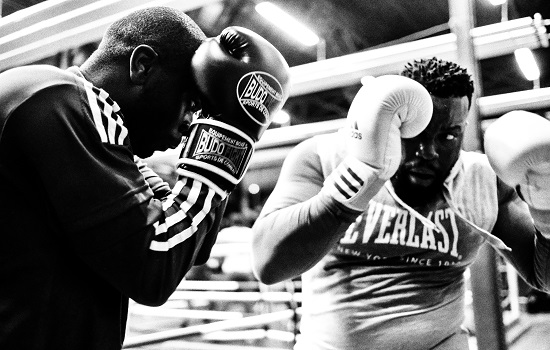
Ducking is a simple defensive boxing tactic, which when launched opens up many chances to win the fight. During a boxing contest, a boxer mostly adopts ducking as his defense to escape the opponent’s punch. Other than this, ducking can also help the opponent by being hit on the body to avoid the headshots. Ducking is also used to deceive someone with a feint. Ducking performed strategically would be useful in many ways, but what can you do if your opponent is a good ducker? How do you tackle an opponent who constantly ducks? It is annoying when all the punches you throw are not landing, because of your opponent’s constant ducking. The enemy may duck to avoid the fight and remains low or to get in a position to escape your punches. Such a expert ducker was Pernell Whitaker, with his outstanding defensive skills he neatly slips past his opponent’s punches.
Knowing the kinds of duckers
Every boxer has his own specialty in a particular technique. Many categories of duckers came across, with different levels of ducking capabilities. Here are some major kinds of duckers.
Freshmen
Those who are new to learning boxing, are unaware of proper defense techniques, slip techniques and rules. They execute ducking a lot more than usual and try to hit below the waist. To overcome such duckers keep your footwork at a steady pace. Pivot or move away when the opponent goes for the counter-blow keeping yourself at the farthest distance. If you are in close proximity, then control his head movement or incline on him to tire him out with your body weight. Throw hooks and uppercuts in the inclined position.
Fight-avoiders
Some duckers never pop up and go for a real fight with the opponent, they constantly duck to stay away from the fight. They also may not engage in a fight if they are tired or hurt and prefer to duck in such this situation. In a fight like this, the chances of you winning are almost certain, as your opponent has given up and he aims to just survive in the ring till the bell rings. If you want your opponent to engage in a battle, be in close proximity to your opponent use your footwork to swift away moving your back foot when he tries to hit you. A ducker will not make eye contact, this gives a chance to throw shots while sneaking and try to land a knockout punch.
Mature and eager fighter
A skilled ducker is an expert at slipping away the opponent’s punches at a quick pace. Their upper body movements are swift and they smoothly lurk away from the blows. On top of that, they are tactical at throwing aggressive counterattacks. Facing such a ducker, you need to constrain his head movement, bring forth your hand to control the head movement and land a blow whenever you see a good body exposure. Go for the chest first and then aim for the head.
The Slicker
These guys are the most expert and feel fun in deceiving the opponent by ducking. They bear amazing head movement and tremendous punching power. They are well adapted to escape attacks from the opponent. Dealing with such people is difficult but not impossible. You need to understand their tricks to trap you so you can overcome them smoothly. Some duckers are continuously jerking and create constant movements to confuse their opponent. Some of them easily anticipate the opponent’s move and quickly moves from the danger zone to avoid a hit. When you sense a trap like this do not go for the blow, stay back and let him attack you. Make him lose his low position and stand head-on into the battle. Aim for the chest and keep your feet alert for a pivot. Do not give him any time to set a trap, keep throwing jabs and hooks to make him vulnerable and drop his guard. Try to avoid landing rhythmic shots; your opponent may hit you into an exposed position. Plan your trick to trap the slicker.
Ways to tackle a ducker
Constrain the opponent’s head movement
You can go for this strategy when your opponent is at a measurable step away from you and is at your waist. His head is low and he may be expecting you to launch the blow first so that he can feint you by slipping and launching a counterattack. Use your hand or the forearm area, bring forth your punch directed to his head and launch it over his head. Keep the pressure on your glove, keep his head locked down and he will not be able to counterattack in such a position. As long as you constrain his head and do not let him swing it, you would manage to restrict him from throwing punches.
Leaning over your opponent
If your opponent is constantly ducking and you do not get a chance to land a head blow, try leaning over your opponent. This technique is helpful when your opponent is close and is trying to hold you or is squirming around your legs. He may also get low as a defense to escape your hard blows rather than counter. To tackle these situations bent your body on top of his head or back. Let your body drop its weight over his body and tire him out. In this way, your hands are free to launch punches at them, as your arms are not occupied in holding. This would appear as an attack rather than a clamp over your opponent.
Aim for the ducker’s body
Aiming for the opponent’s body rather than their head is always the better option. When they are in a low position, take your time to launch uppercuts and aggressive hooks at their torso or the back, these are the locations where they least expect a blow. It would make them more vulnerable as they would utilize their hands to defend themselves and they will not get a chance to counterattack. Go for the position where they least expect a blow.
Plunge with rapid moves
To get a handful of scores throw rapid shots at his body, aim for the head and shoulders or anywhere you can reach for. Transfer your strength into hooks and uppercuts, hit aggressive blows to reduce their speed and tire them out. Do remember to be on your defense when your opponent slips your shot and counterattacks.
Swivel to the side
Pivoting to a side is the best skill for saving yourself from the opponent’s hit who is constantly ducking. When you see your enemy getting low make a swift lateral movement to escape any counter punches from the opponent, this usually works if your opponent is close. After a pivot go for a bunch of punches, in a ducked position your opponent cannot use their footwork skills. When the body is pressed downwards, the foot mobility is decreased and this gives you a chance to lean forward, launch punches and distort their balance.
Things to avoid against the Duckers
Never aim for the head
When your opponent gets low, resist yourself to hit his head. Either you would miss the blow or you could be strongly encountered. Your opponent may jump back to his rising stance and blow a hard attack while you were busy attacking his exposed head when he was low. Do not let your opponent bait you
Keynote: Beating an expert ducker is quite difficult, due to his constant head movements and jerking body. Getting him cornered with your punches and controlling the head movements would find you a solution to handle a ducker.